Curated by José Manuel Mayorga
Invitation Photography
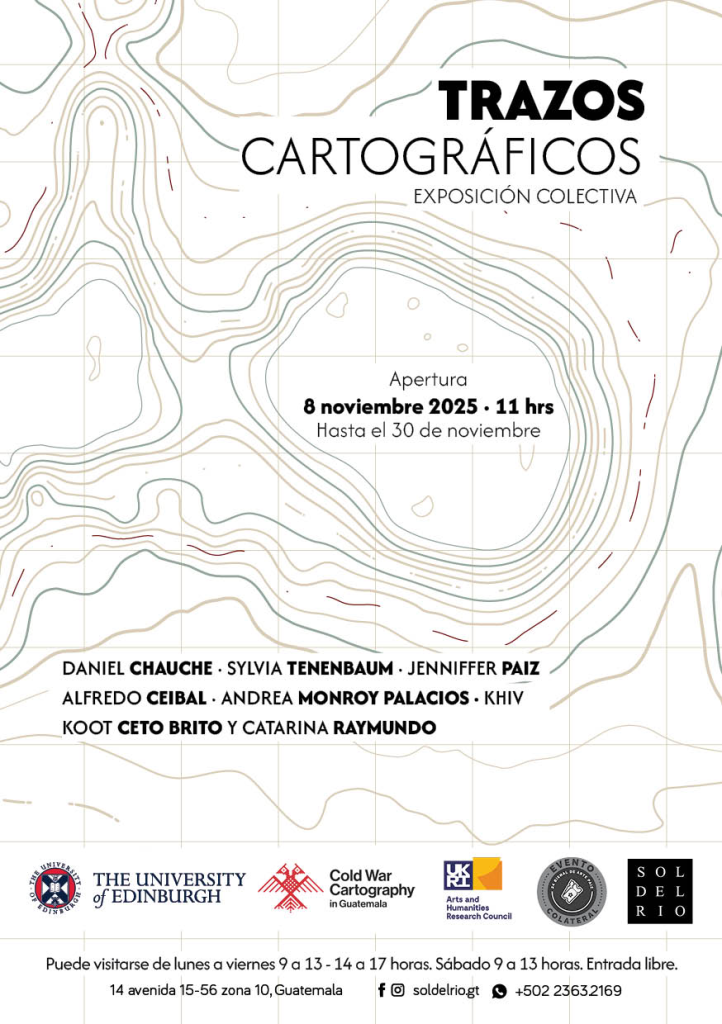
The exhibition Cartographic Traces (Sol del Río, November 8–30, 2025, Guatemala City) develops from a critical review of artistic practices in Guatemala that have addressed territory as a political, symbolic, and affective space. The exhibition takes cartography as its central axis in order to reflect on the effects of the Cold War, processes of territorial transformation, memories of the internal armed conflict, and community-based forms of resistance.
The exhibition is articulated in dialogue with the research work of the Komon Sajbichil project at the University of Edinburgh, in collaboration with the Ancestral Authorities of the Ixil Territory and Universidad Ixil. It brings together works by five visual artists, along with documentary materials, cartographic archives, textile interventions, and other proposals. The works on display enter into dialogue with one another, establishing relationships between the recent past and the present, between rural spaces marked by violence and urban environments shaped by new dynamics of displacement and control.
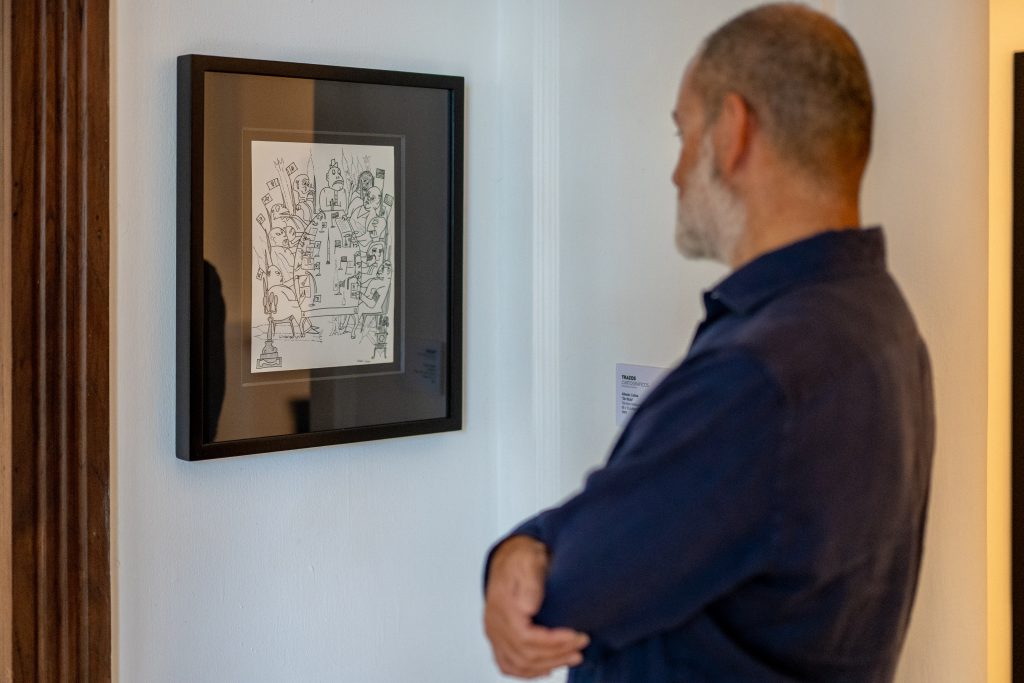
The tour begins with an untitled drawing by Alfredo Ceibal from 1980, depicting figures seated around a table deliberating over the fate of the world, a direct allusion to the geopolitical conflicts of the Cold War. With a blend of humor and irony, the piece establishes visual connections with the reality of Latin America, the cinema of Stanley Kubrick (Dr. Strangelove), and contemporary references such as A House of Dynamite by Kathryn Bigelow.
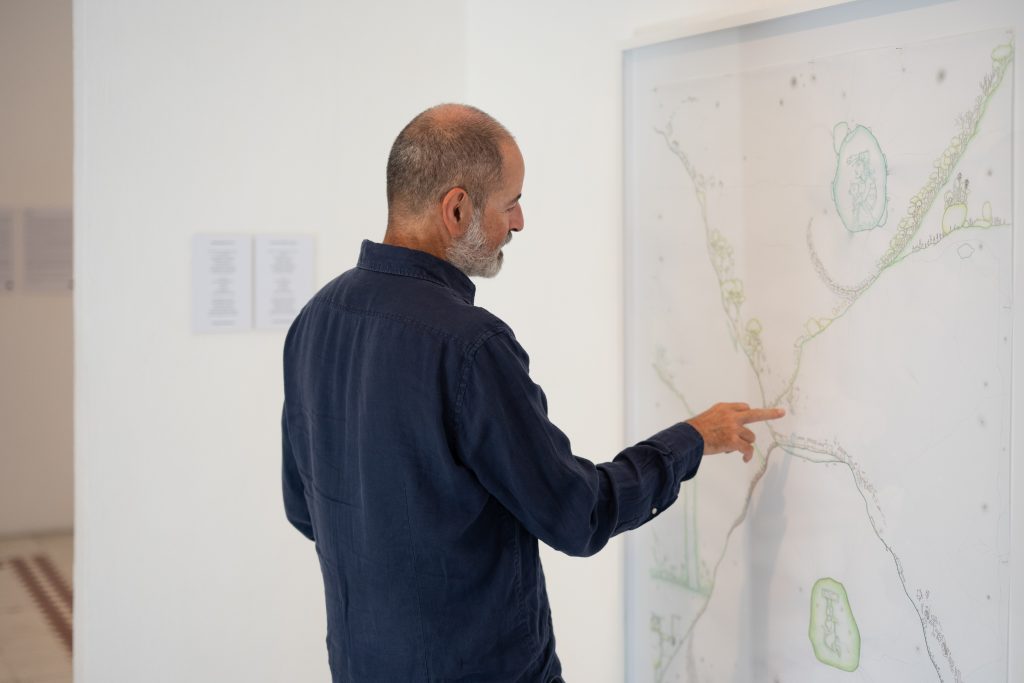
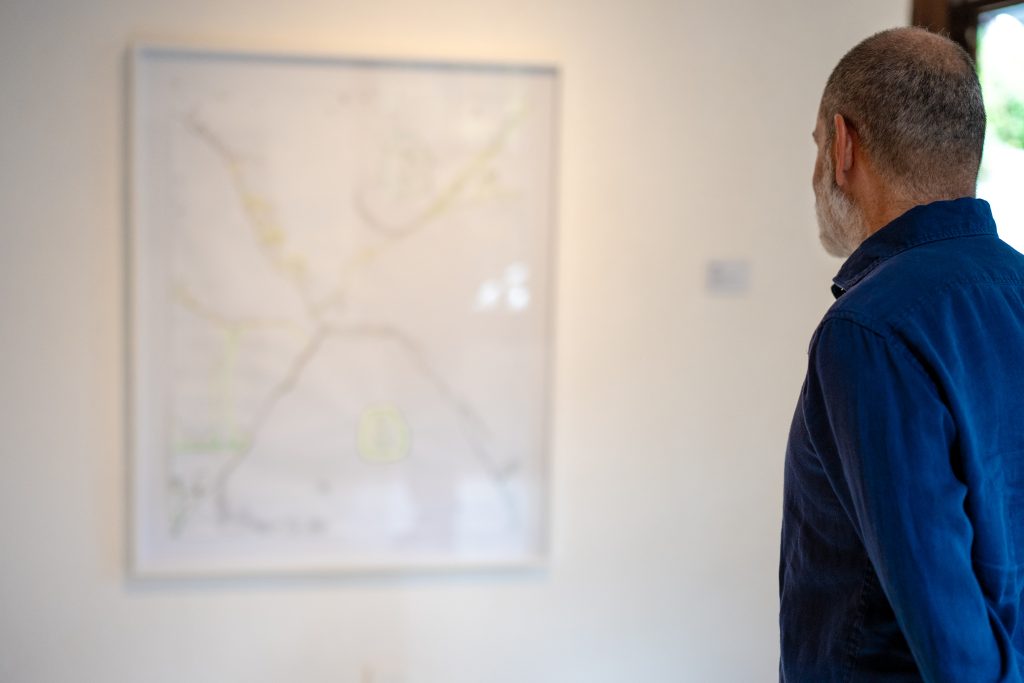
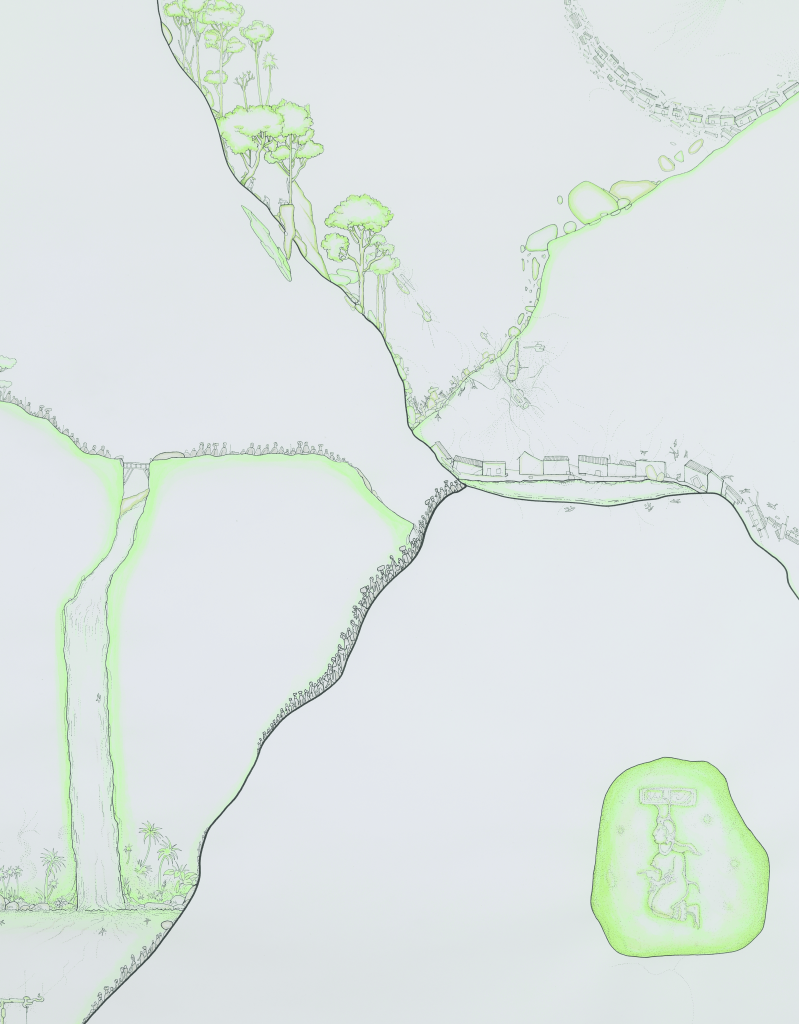
In the adjoining gallery, Ceibal’s large-format drawing Paths toward the Dignification of Memory (2024) poetically and critically addresses the impact of the armed conflict in the Guatemalan highlands, featuring representations of helicopters, forced displacements, figures in exile, and elements of Maya spirituality. Ceibal fabulates from the realm of the magical, proposing a reading of territory as a space of balance and magic that later transforms into one of struggle, memory, and ancestral justice. In the catalogue, the work is complemented by a quotation from Eduardo Villalobos’s text Ixtab (2022).
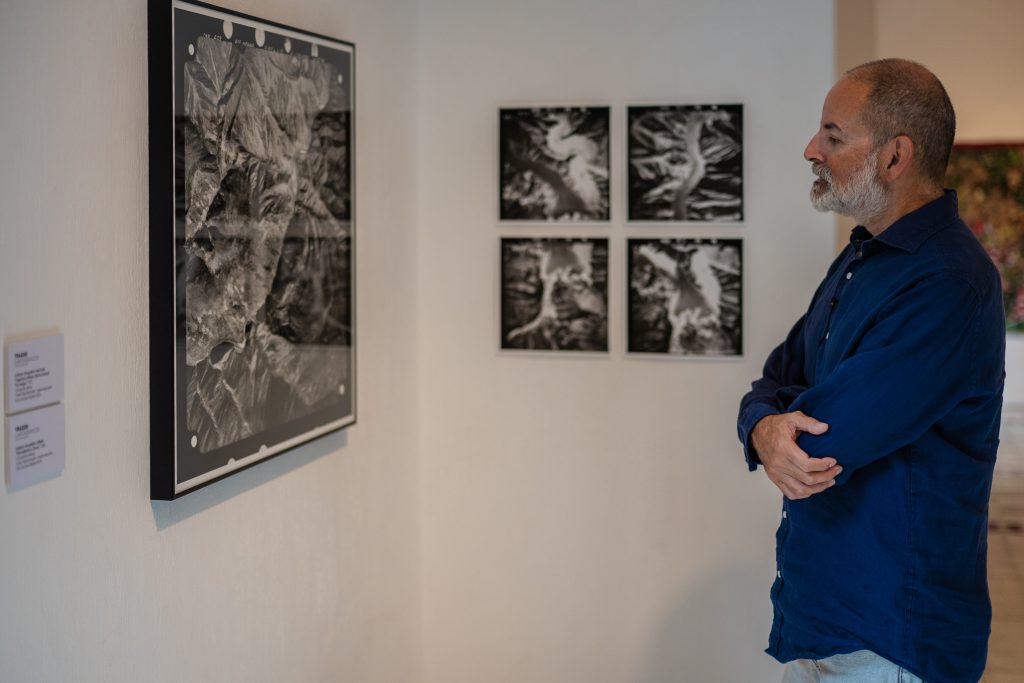
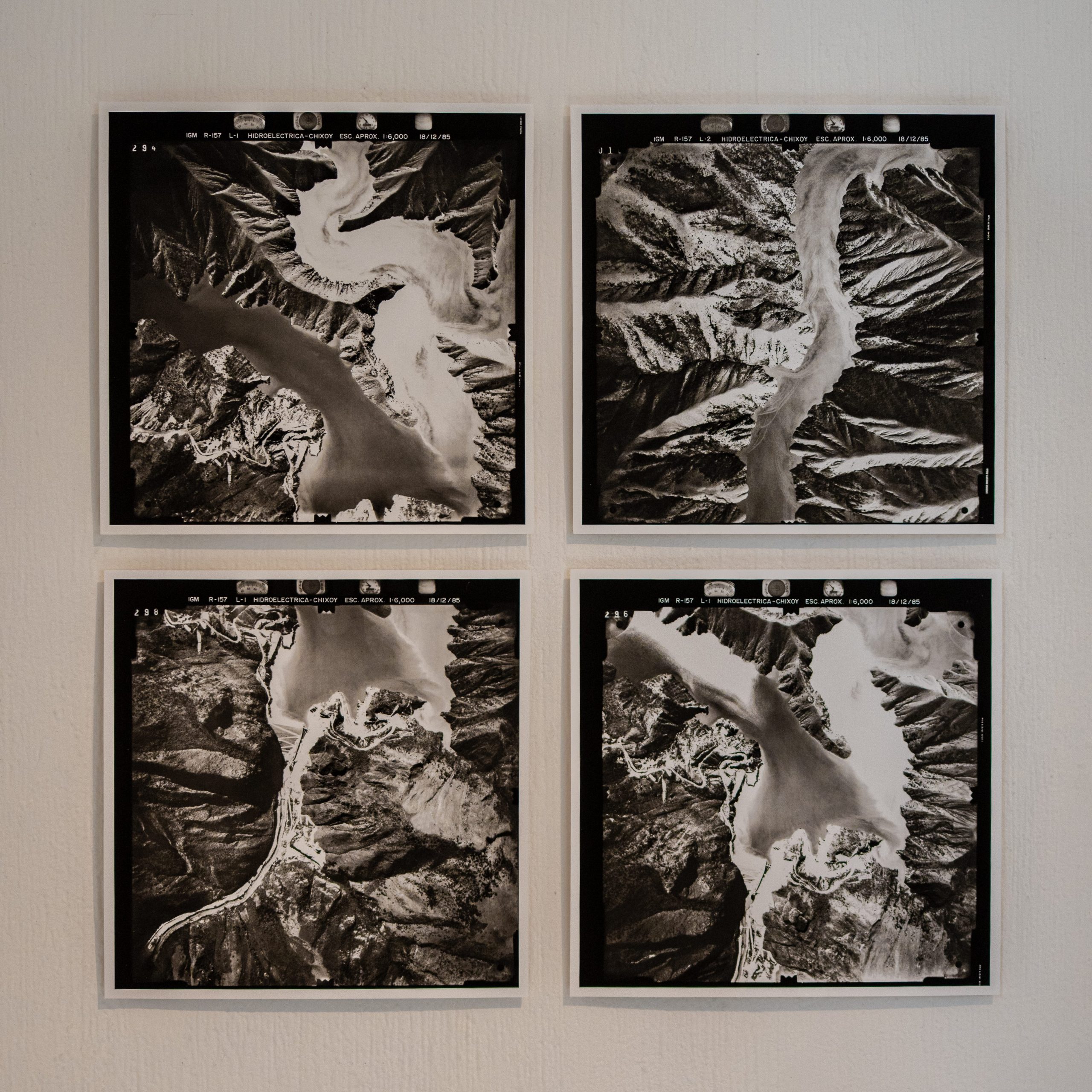
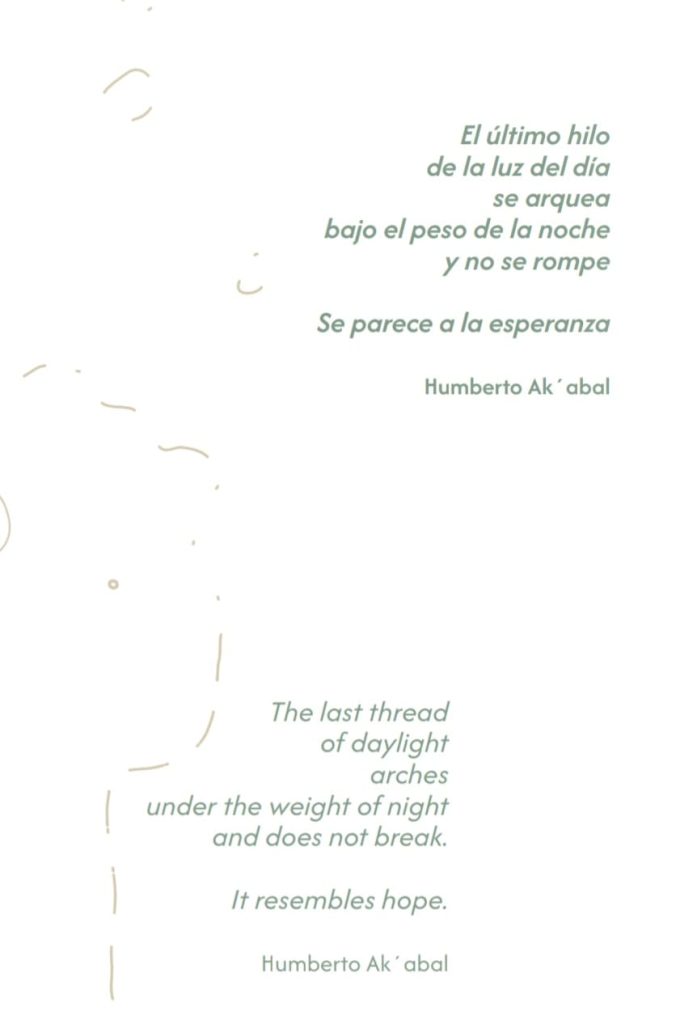
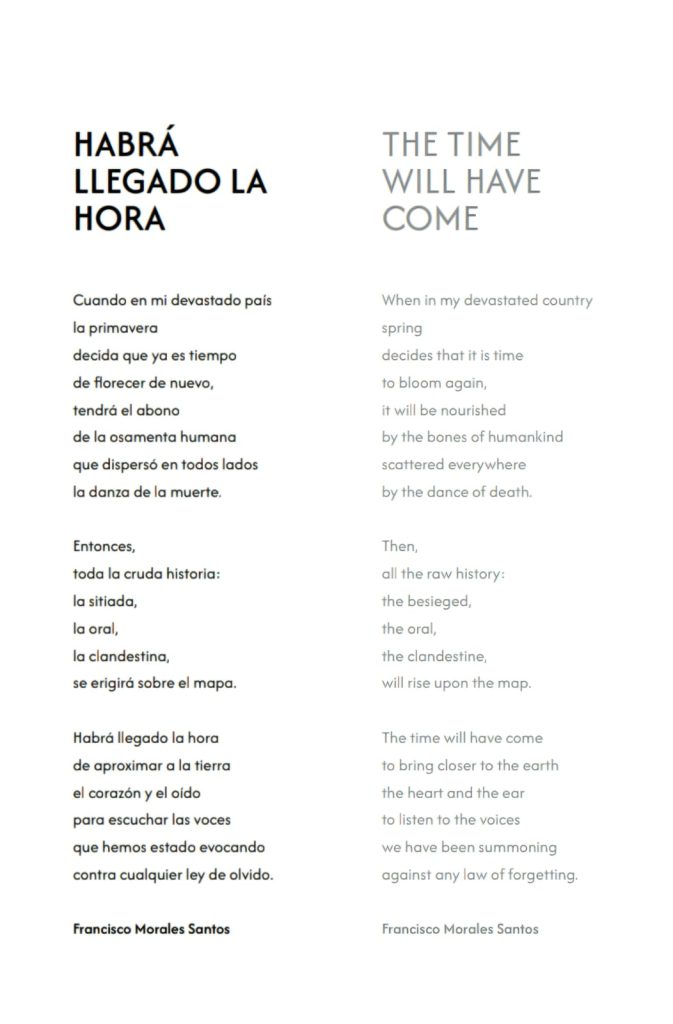
In this same gallery, history and lived reality are incorporated through the inclusion of photographs and maps from the National Geographic Institute (1972) and the Military Geographic Institute (1985), which document transformations of the territory in the Río Negro region, particularly in relation to the development of hydroelectric projects. These aerial-view maps are the result of research conducted by Julie Gibbings. On the walls, the poetry of Humberto Ak’abal and Francisco Morales Santos adds its own force and emotional depth.
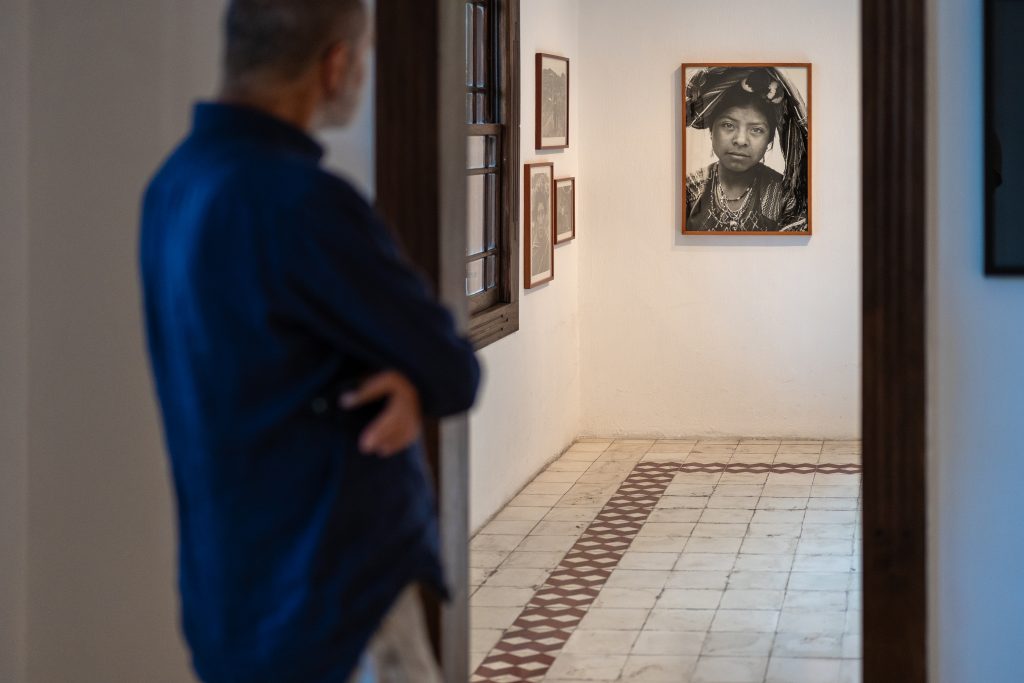
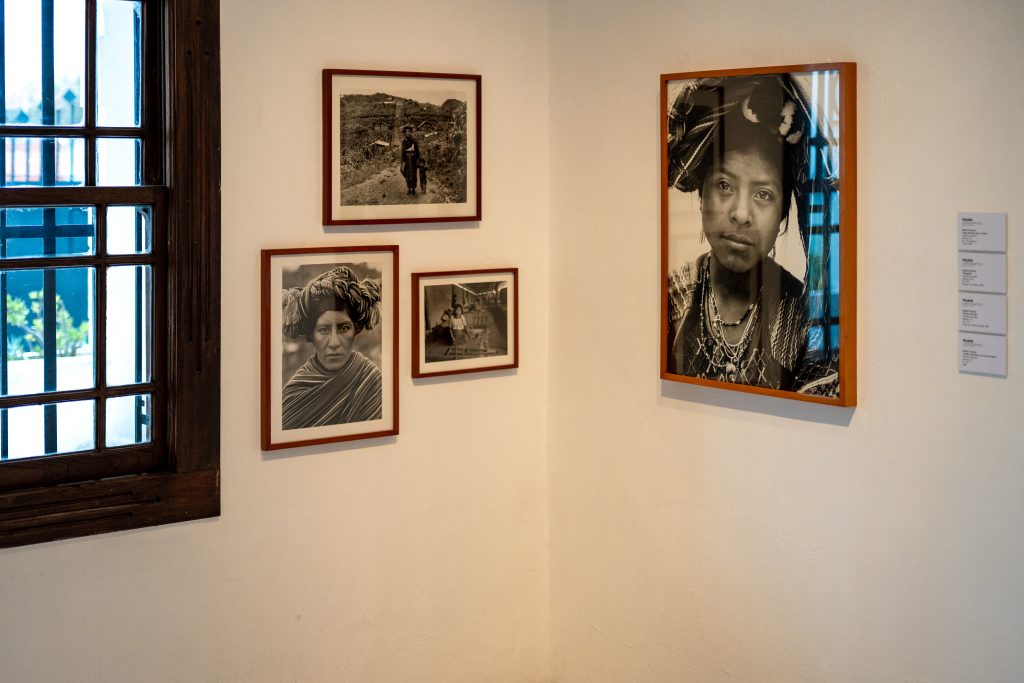
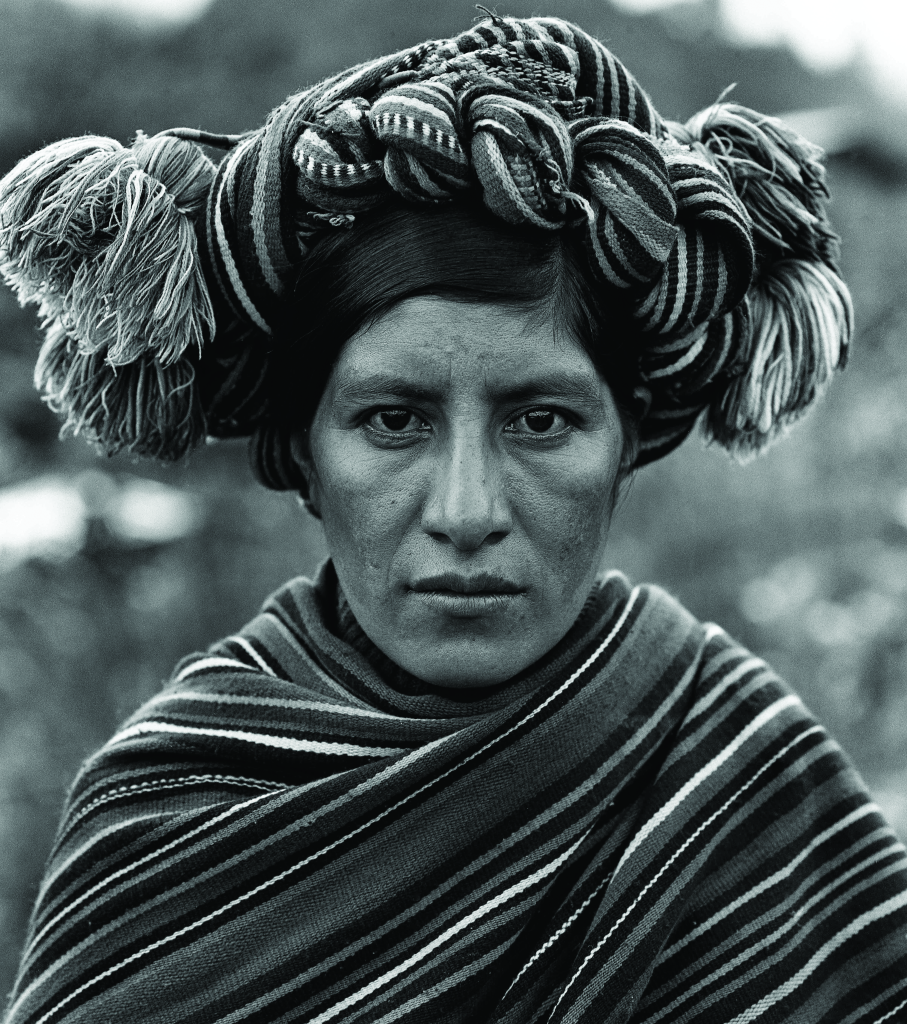
The exhibition is further enriched by several photographs by Daniel Chauche taken in communities in Quiché during the 1980s and 1990s. The images document everyday scenes traversed by violence, loss, and resistance. The selection presented in this section portrays the dignity of women survivors, their desolation, and certain community rituals. All of Chauche’s photographs on display retain a testimonial power that positions the photographer as a direct witness to the events.
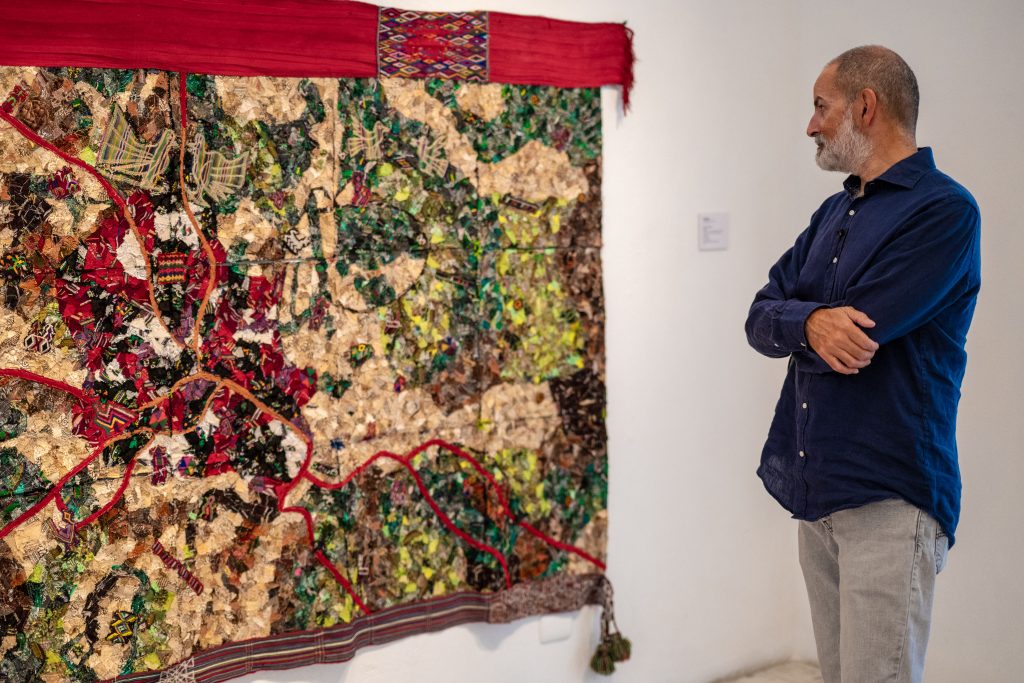
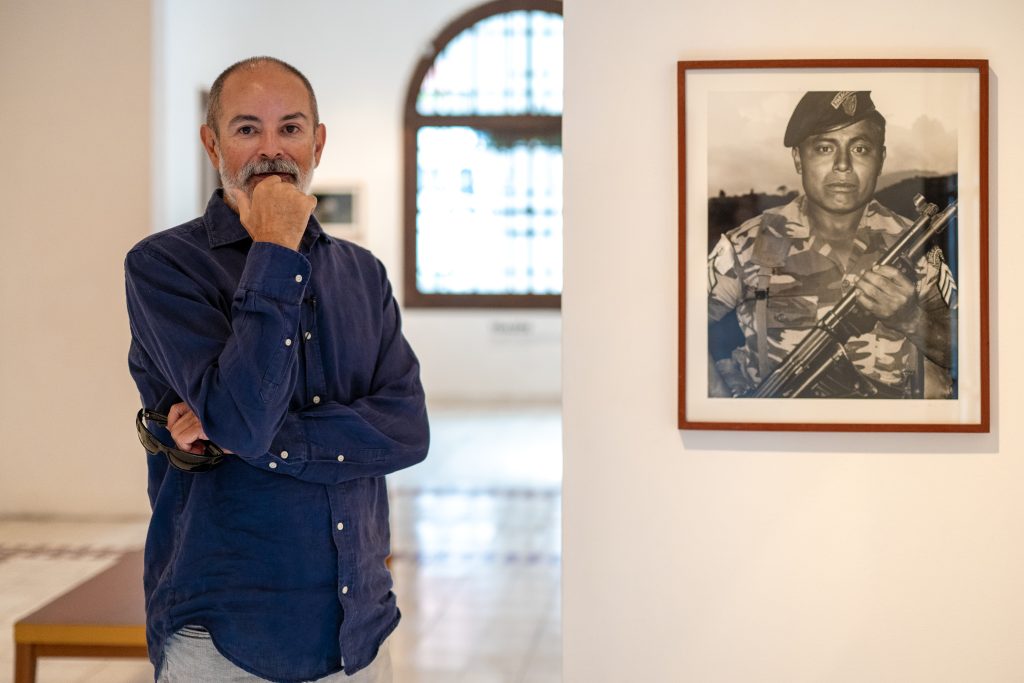
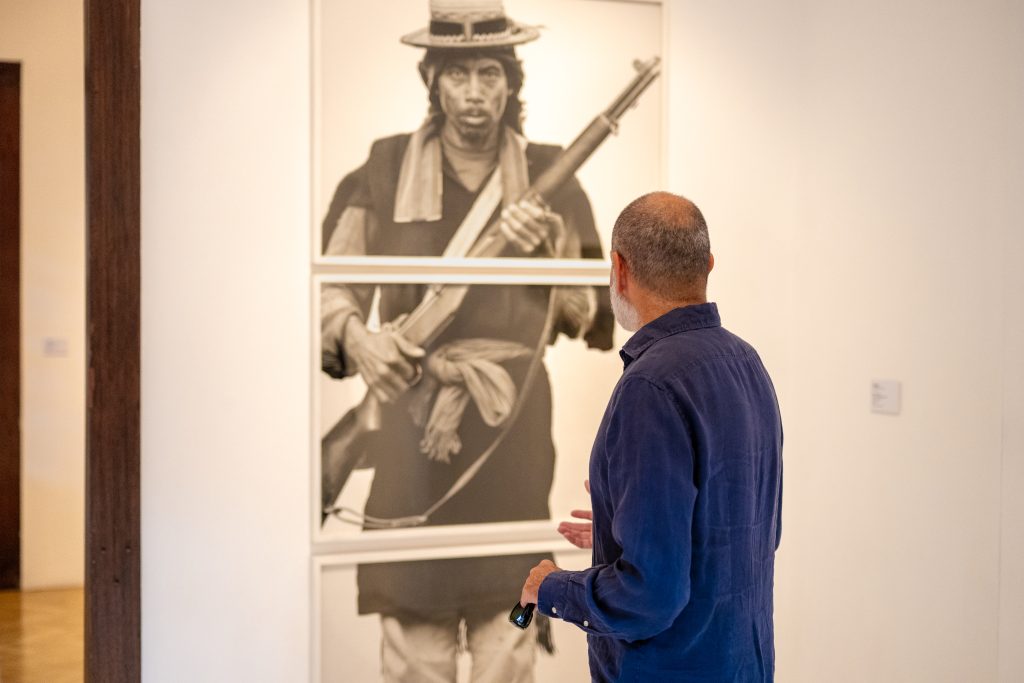
In dialogue with Chauche’s work—and as a result of the thoughtful exhibition design by Víctor and Gustavo Martínez, which includes a large-format photograph of a civil patrol member and other images of soldiers—is the work of Sylvia Tenenbaum, who presents her Woven Geographies (2016). These three textile works reinterpret territory based on community maps produced by the National Geographic Institute in the 1960s. The pieces were created using fragments from multiple cortes and güipiles belonging to Ixil women survivors. Exhibited together for the first time, each work functions as an affective cartography, in which threads reconstruct history from a feminine and communal experience. Although Tenenbaum lived outside Guatemala during the armed conflict, her return to the country prompted an in-depth investigation into memories of dispossession and cultural persistence. Her works reference Ixil territories: Santa María Nebaj, San Gaspar Chajul, and San Juan Cotzal.
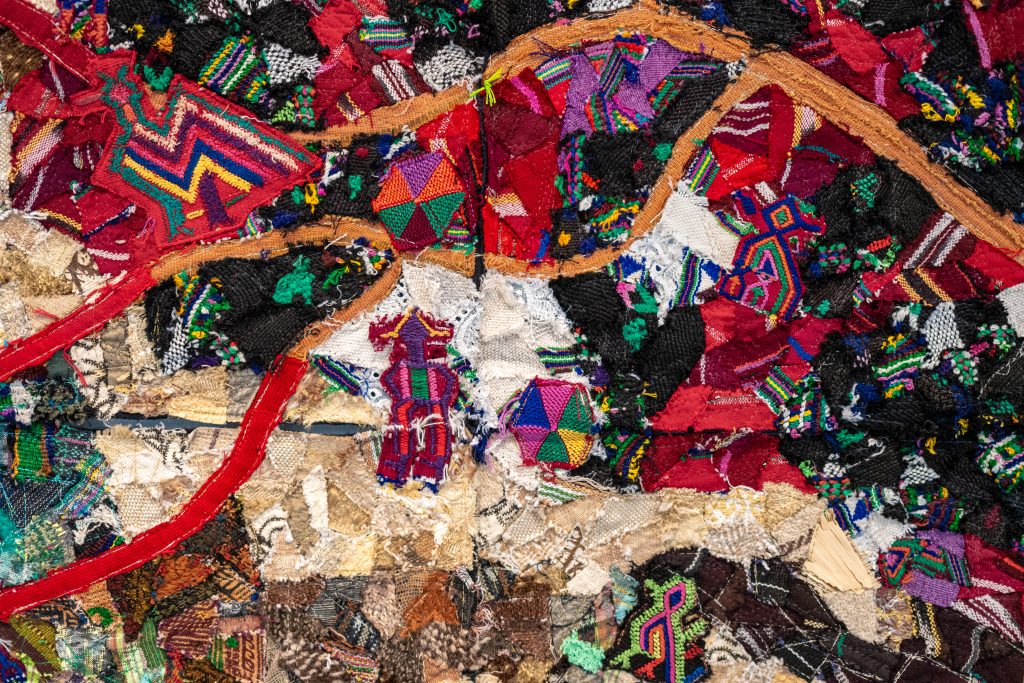
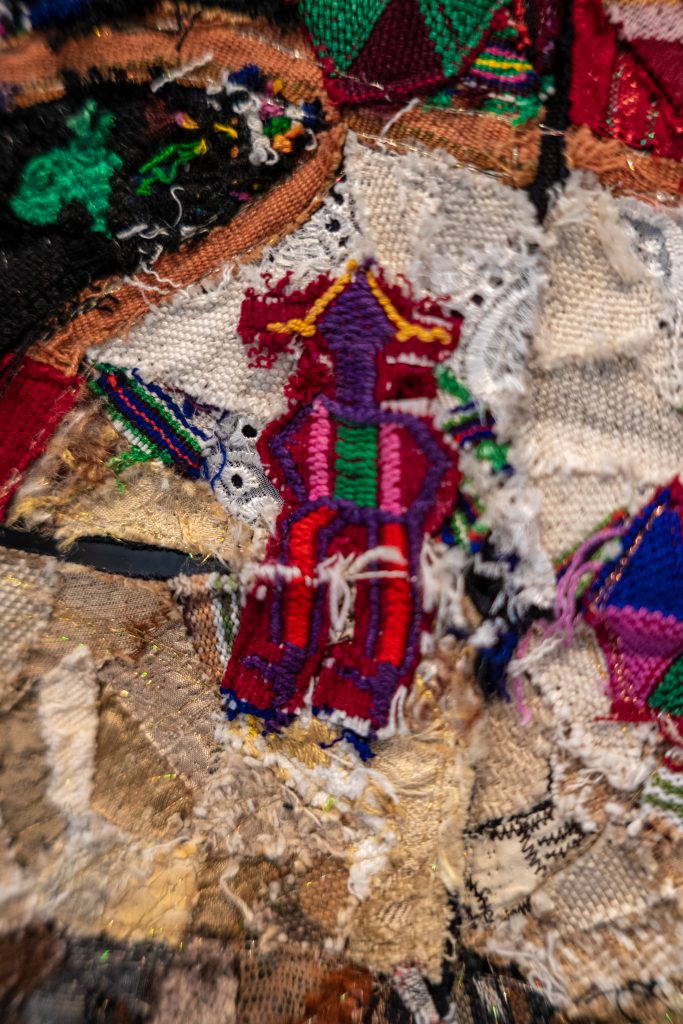
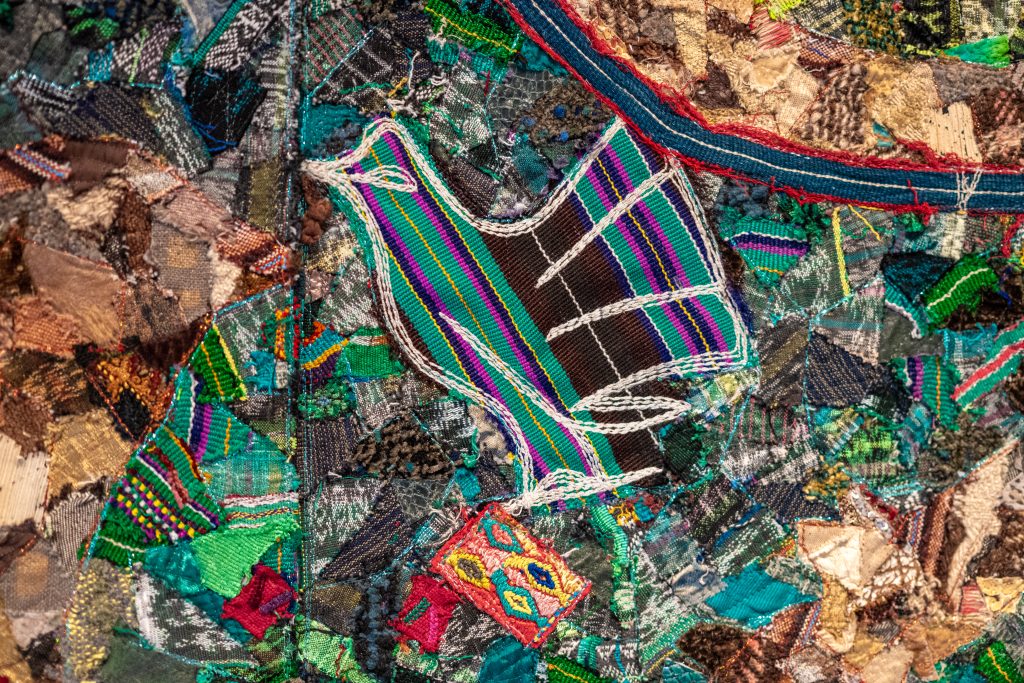
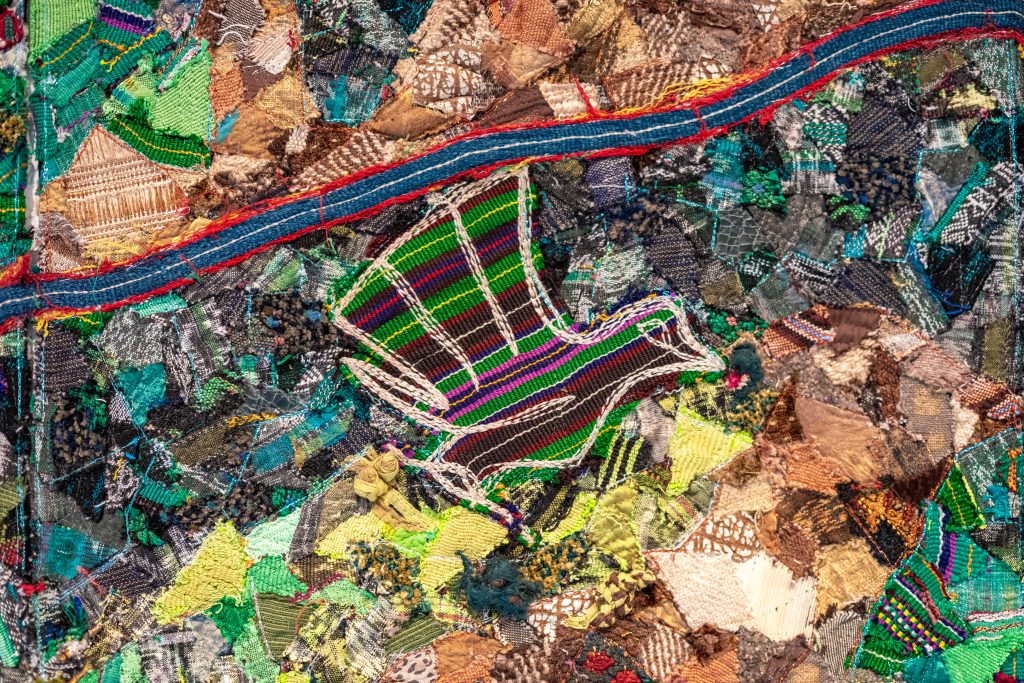
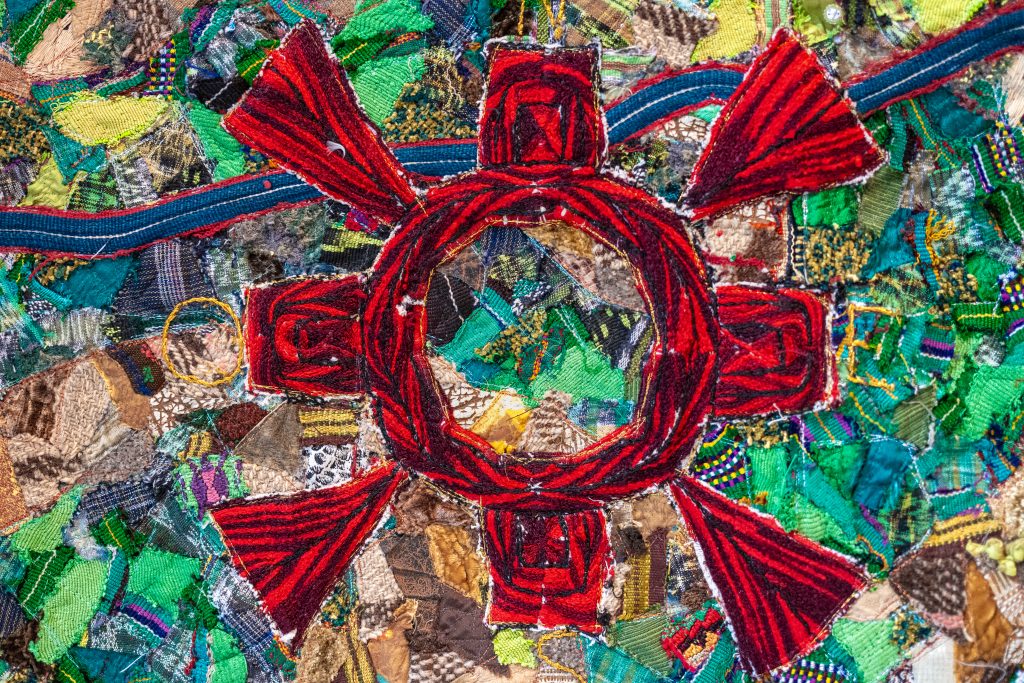
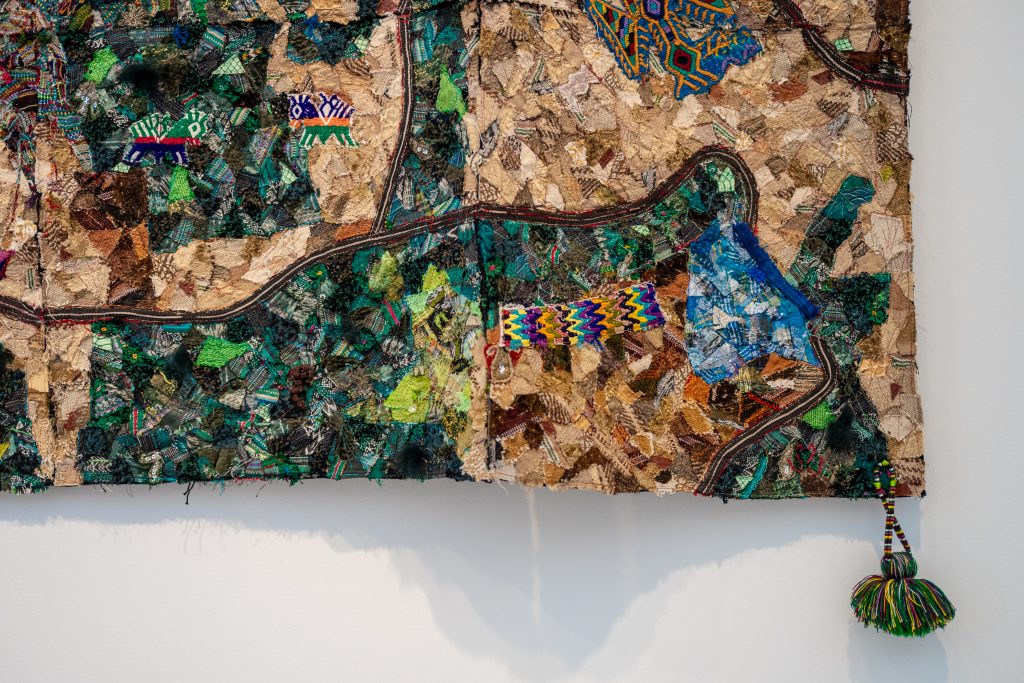
As an additional note, among Tenenbaum’s works, Q’uq’umatz. San Juan Cotzal stands out. The piece traveled to participate in an exhibition in Ukraine but was never displayed; for weeks it remained stored in a postal office and eventually returned to Guatemala, charged with energy, after months of uncertainty about its whereabouts. This piece is an integral part of the group of works by the artist on view, all of which evoke forced displacements, armed conflicts, and connections between distant geographies shaped by violence, while also affirming the strength and dignity of women weavers.
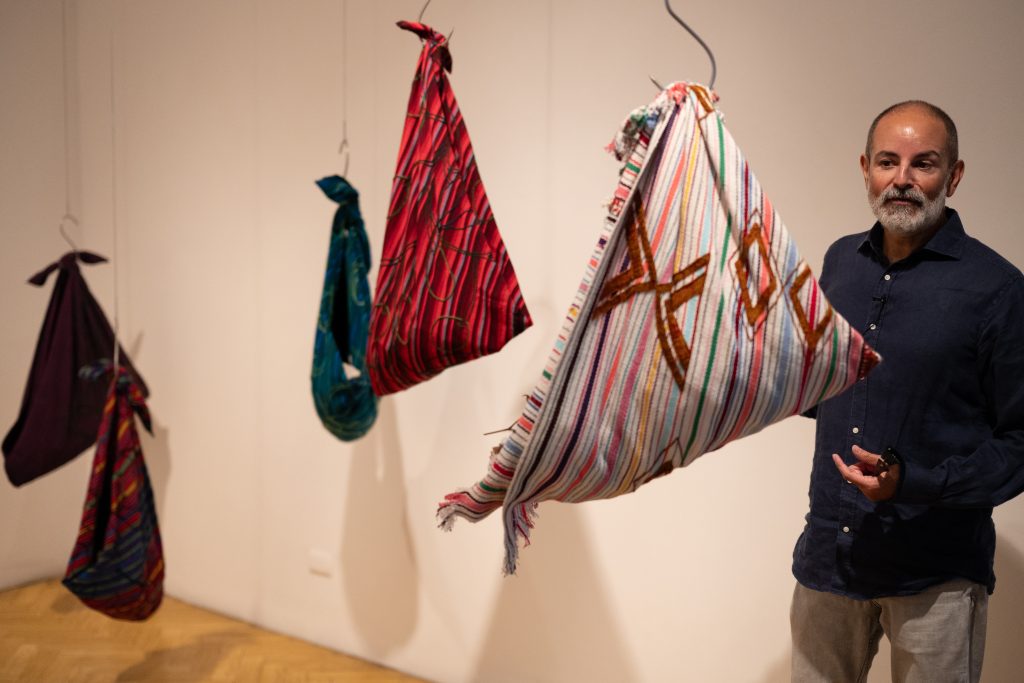
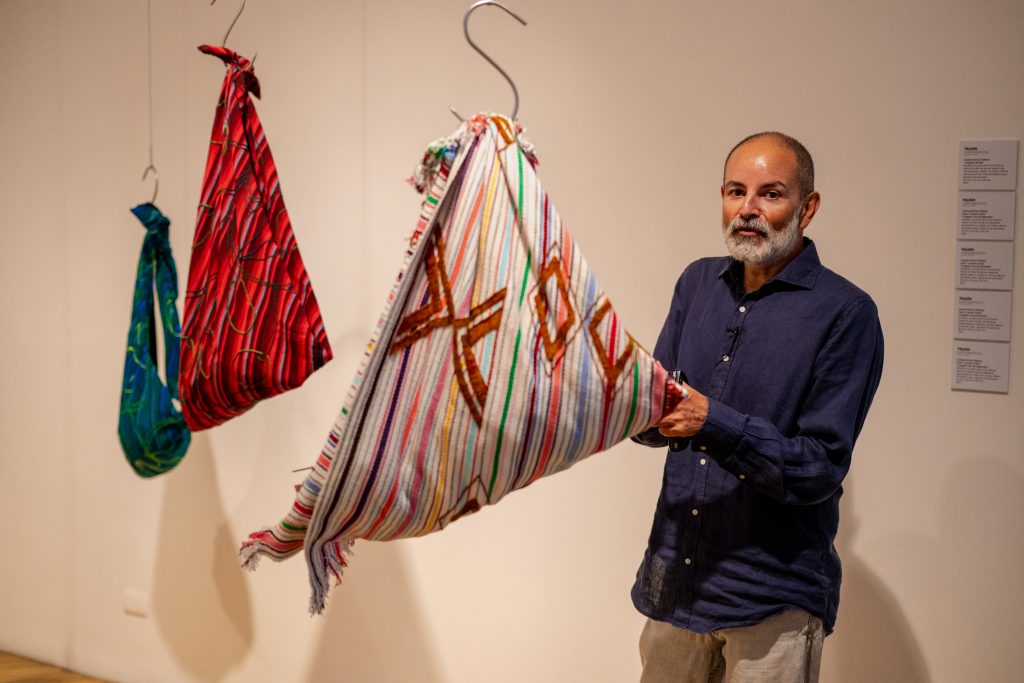
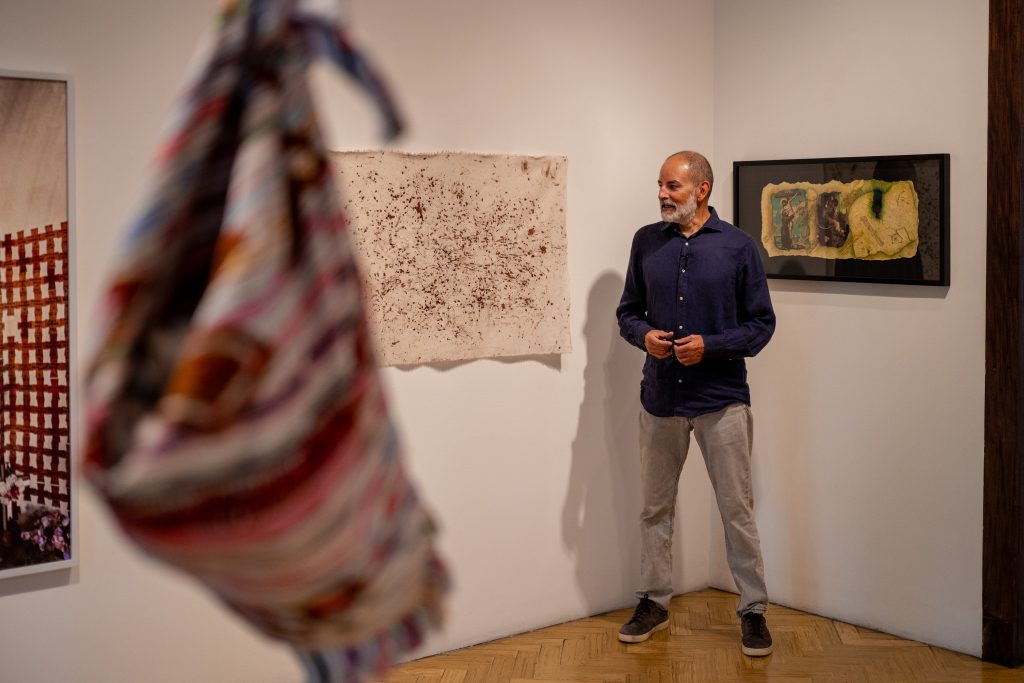
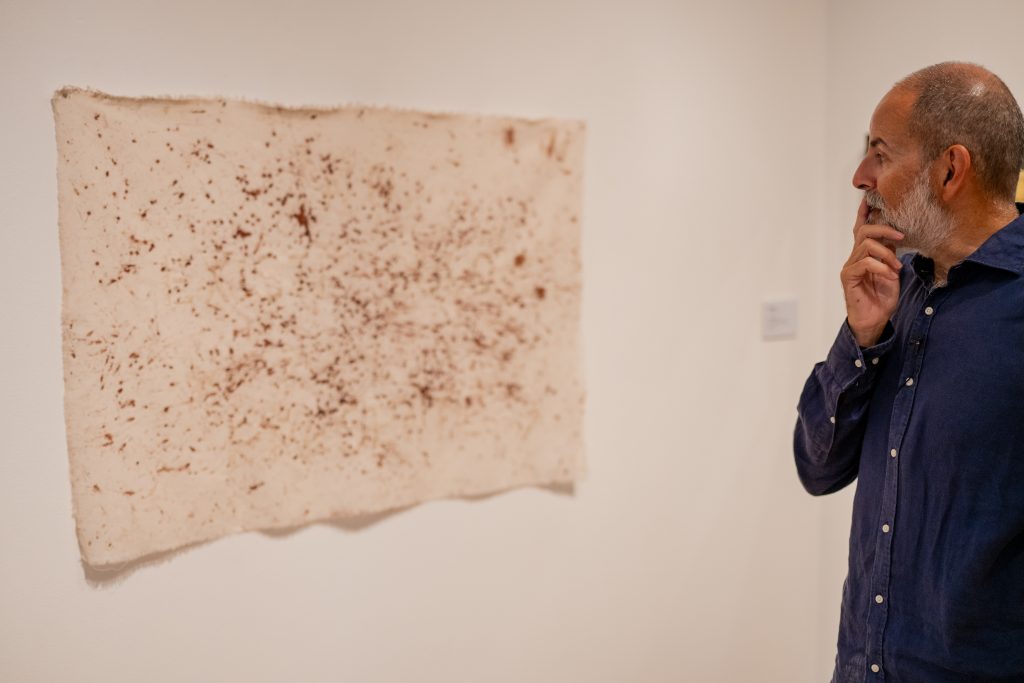
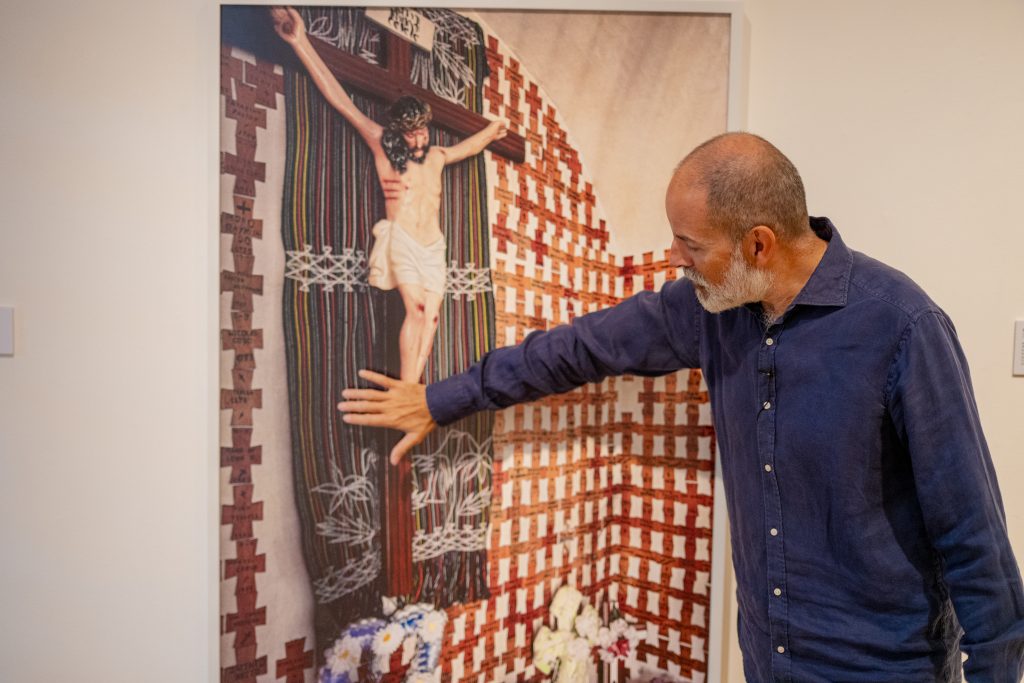
The tour continues with works by Andrea Monroy Palacios from the series When I Die: Bearers (2023–2025). From a curatorial perspective, the installation directly alludes to the displacement of people during the internal armed conflict. It consists of canvases woven on floor looms by Guatemalan artisans, joined by lace-like randas and hand-embroidered by the artist, featuring representations of Guatemalan flora and fauna, including one specific to the Ixil region. Another of her works is a manta textile, embroidered white on white with the text There Is Not Only the Present, stained with banana sap, a fluid that leaves marks similar to blood. The works propose a symbolic reading of flight, trauma, and survival. This gallery takes its name from a work by Ceibal, The God of Life and Death, a singular collage within the artist’s production that adds another interpretive layer to the exhibition. This is complemented by a large-format color photograph by Daniel Chauche depicting a crucified Christ mounted vertically on a Chajul sash in Quiché, surrounded by wooden plaques in the shape of crosses bearing the names of those who died during the conflict in 1982 and 1983. The image evokes the most intense years of state violence.
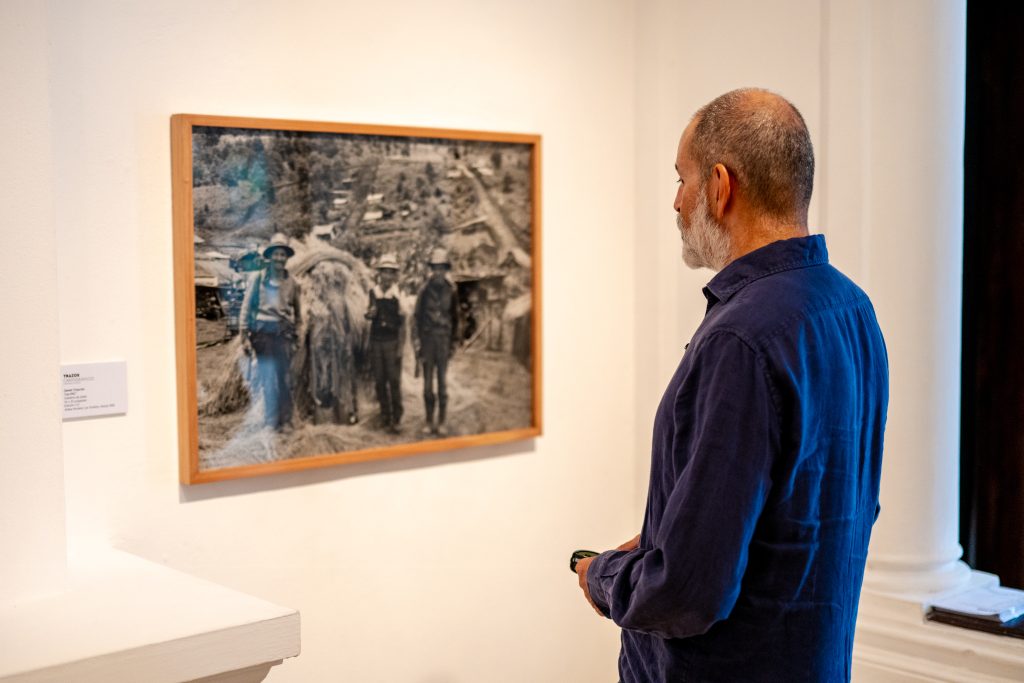
In the adjacent gallery, a photograph documents Aldea Modelo Las Violetas in Nebaj in 1988, showing three men identified as civil patrol members. These model villages, imposed by the Army, were part of a strategy of control and territorial reorganization in the highlands.
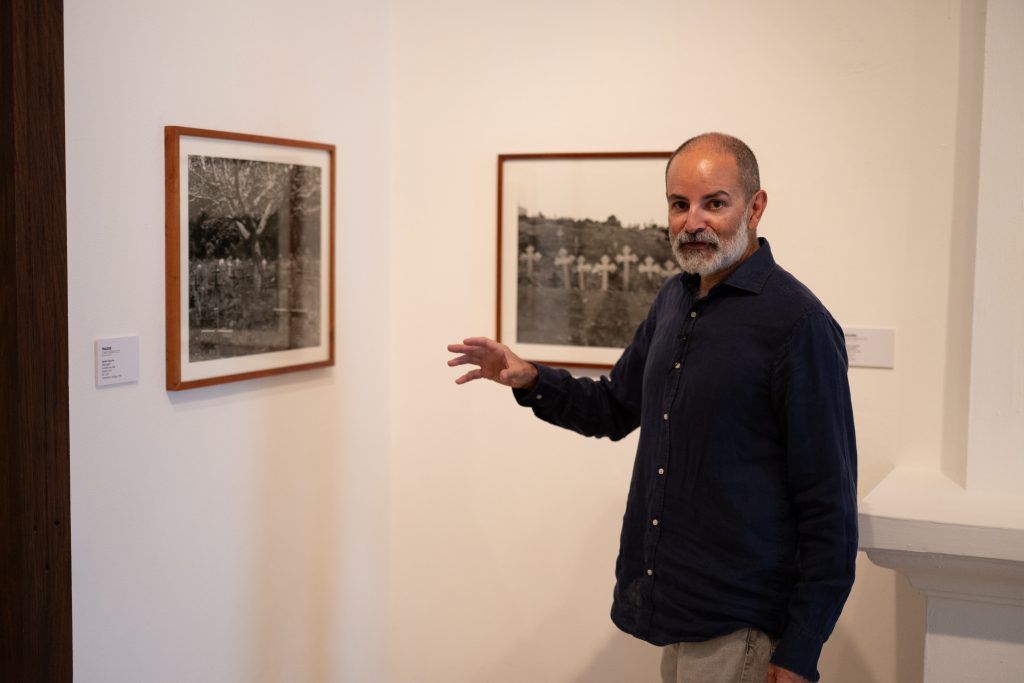
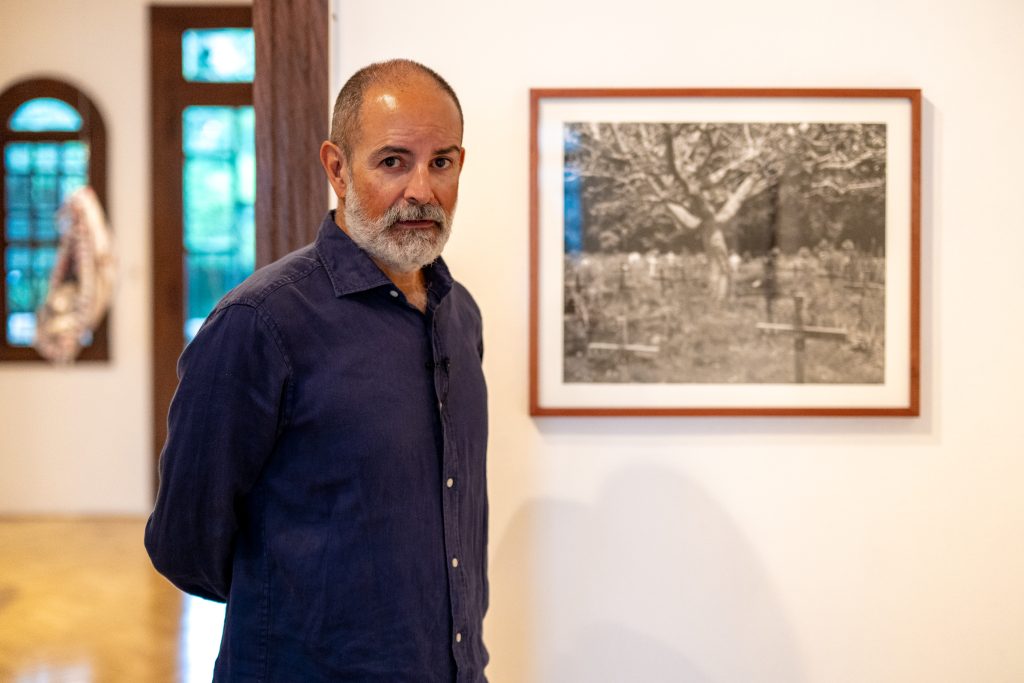
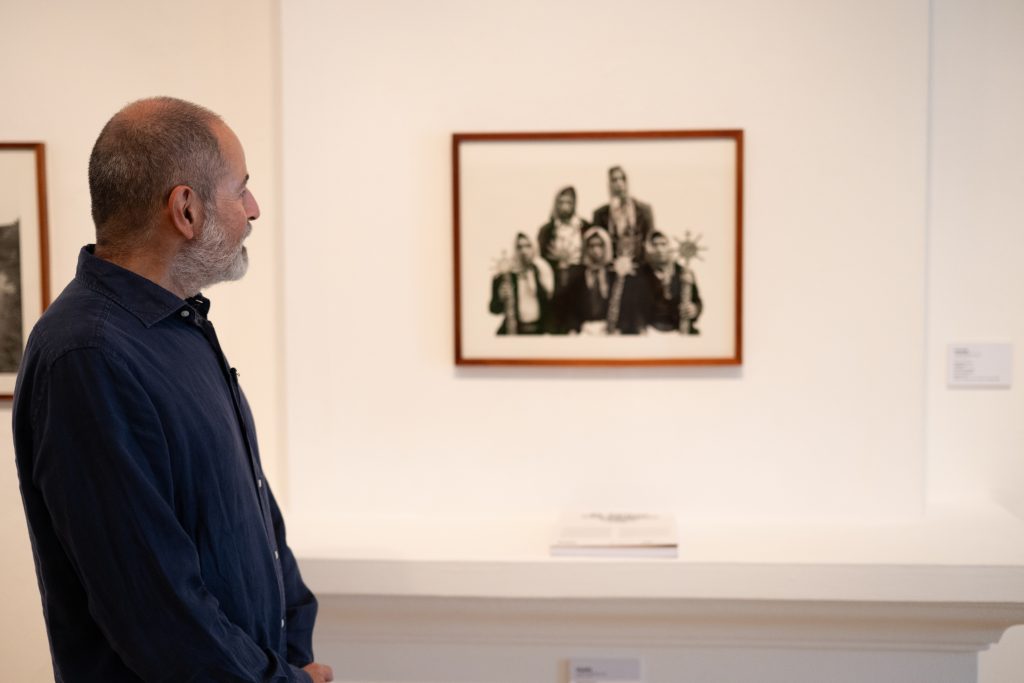
One of the final photographic works by Chauche included in the exhibition portrays a cemetery linked to events of 1982. The scene, marked by restraint and contained beauty, serves as a closing moment for a section defined by the presence of death as a structuring element of the territory. In correspondence with the duality inherent in life, his portrait of the group of Cofrades Mayordomos of Nebaj, in direct dialogue with the Map of Memory of Ilom placed before them, is particularly eloquent.
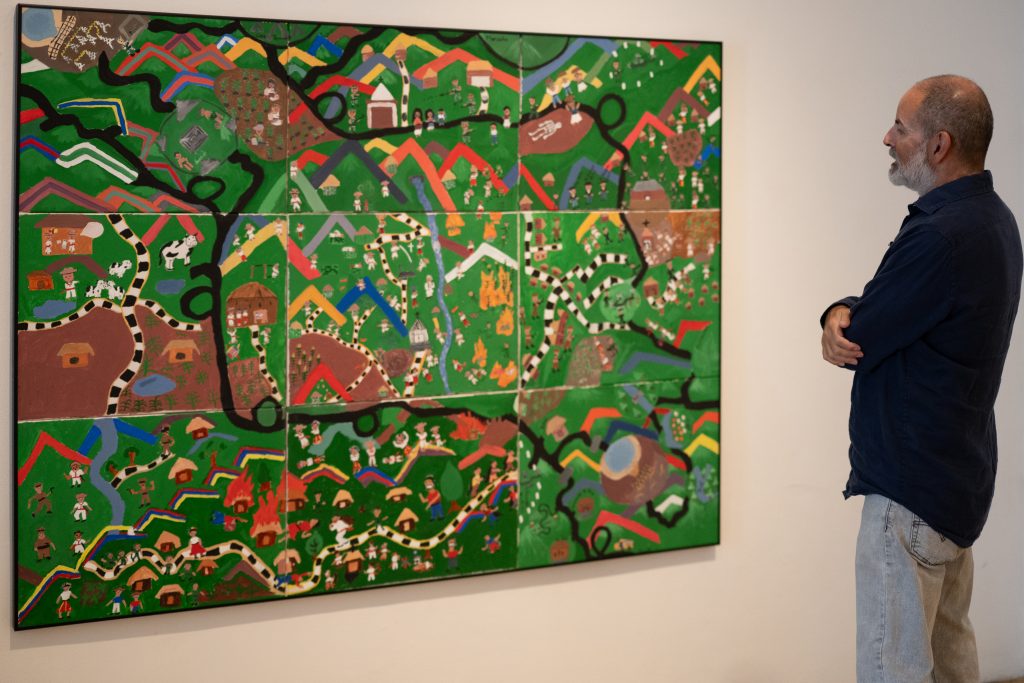
The exhibition is further enriched by the presentation of a collectively created work by Khiv Koot Ceto Brito and Catarina Raymundo, researchers at Universidad Ixil. The Map of Memory of Ilom was produced through direct consultation with community members and documents historical processes such as colonial invasion, the expansion of coffee and cattle ranching, genocide, forced displacement, and efforts to rebuild the social fabric. This community map is not a closed object, but rather a living device in constant transformation.
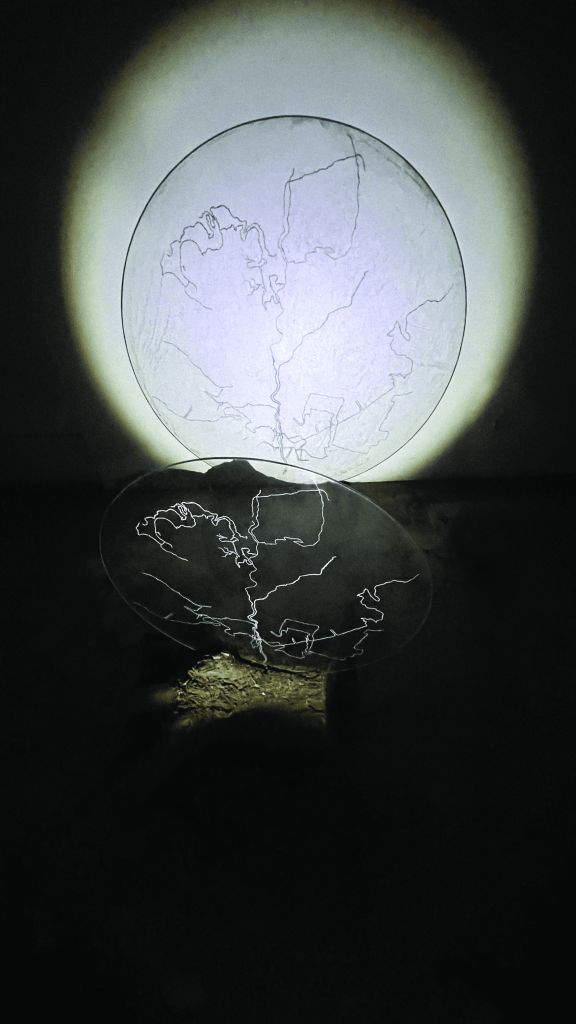
The exhibition concludes with an installation by Jenniffer Paiz from her research project Untitled (2024), composed of urban maps of ravines in Guatemala City engraved on glass, illuminated, and placed on tree trunks from the same area. These marginal urban geographies have been the setting for multiple forms of violence, displacement, and exclusion. The work suggests a contemporary reading of territory as a space of conflict, now shaped by organized crime, gangs, and urban precarity. Paiz’s work is developed through field research and in collaboration with anthropologist Melanie Ford, with whom she constructs a critical reading of Guatemalan urban space.
As a whole, Cartographic Traces proposes a rereading of territory as an archive of memories, wounds, and resistances. In contrast to institutional maps of power, this exhibition puts forward other ways of tracing, seeing, and remembering.